
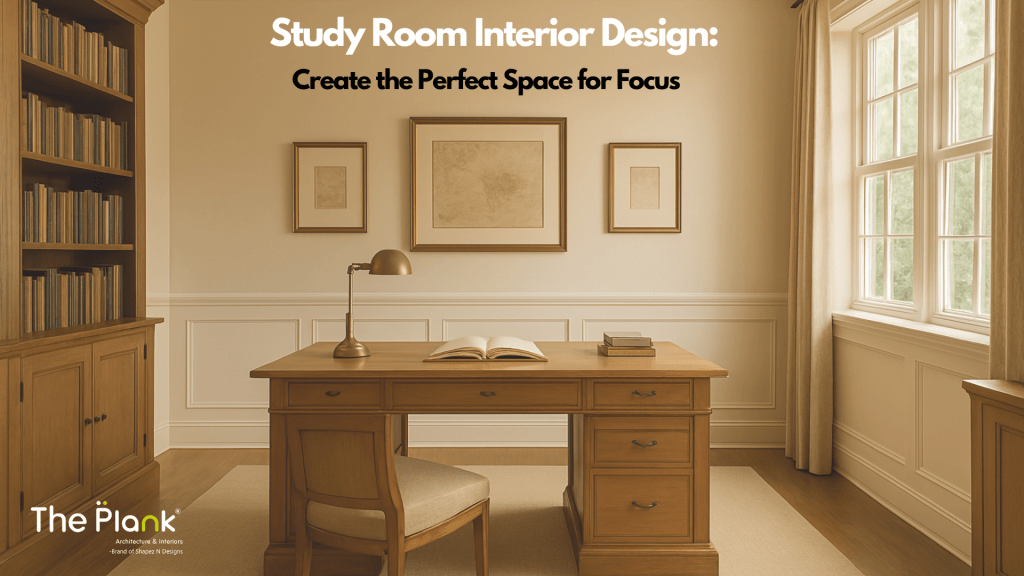
“Be faithful to your own taste, because nothing you really like is ever out of style.” – Billy Baldwin
In the modern home, a dedicated study space isn’t a luxury; it’s a necessity. Whether you’re working from home, studying for exams, or needing a quiet nook for creative brainstorming, study room interiors play a crucial role in setting the tone for productivity. With the right design elements, you can change any corner of your home into a creative and beautiful workspace.
Here’s a step-by-step guide to help you design a study room that enhances focus, creativity, and comfort.
1. Choose the Right Location
Before diving into furniture or decor, start with the location. Your study room should ideally be in a quiet part of your home, away from distractions like the kitchen or living room.
Tips to choose the right spot:
- Opt for rooms with natural light
- Avoid high-traffic zones
- Consider soundproofing if needed
- If space is limited, a study nook in your bedroom or hallway can also work
Best interiors begin with thoughtful planning. Picking the right spot lays the foundation for a truly efficient study environment.
2. Ergonomic Furniture for Comfort
Comfort is key to sustained productivity. Investing in ergonomic furniture doesn’t just make your study room look stylish. It saves you from aches, fatigue, and bad posture.
Must-haves:
- Ergonomic chair: Provides back and lumbar support
- Height-adjustable desk: Keeps your arms at a natural angle
- Footrest: Optional, but excellent for posture
Pro Tip: A well-designed chair and desk combo can make hours of study feel like minutes.
When it comes to home interiors, functionality should always meet form.
3. Lighting Matters
Lighting can either make or break your study room experience. Insufficient lighting leads to eye strain and fatigue, while the right setup keeps you alert and focused.
Lighting recommendations:
| Light Type | Purpose | Ideal Placement |
| Natural Light | Boosts mood & energy | Near windows or skylights |
| Task Lighting | Focused study/work lighting | Desk lamps or clip-ons |
| Ambient Lighting | Fills the room evenly | Ceiling or wall-mounted |
For the best interiors, layer different types of lighting to suit different moods and tasks.
4. Color Palette for Productivity
Colors directly influence how we feel. A smart color palette can help improve concentration, reduce anxiety, and keep the study environment calm yet stimulating.
Productive color options:
- Blue: Enhances focus and calmness
- Green: Reduces eye strain, great for long hours
- White or beige: Clean and distraction-free
- Accent shades like mustard or coral can add energy without overwhelming
Try to avoid overly bold or dark tones that can feel heavy. Study room interiors should strike the right balance between minimalism and vibrance.
5. Personalization & Decor
A personalized space is a productive space. The trick is to make the room feel like yours without letting decor turn into clutter.
Ideas to personalize:
- Bulletin boards or inspiration walls
- Wall art or motivational quotes
- Indoor plants for a fresh vibe
- Organizers and shelves to keep things tidy
Don’t go overboard—a clutter-free setup is still key to a successful home decor plan.
6. Tech-Friendly Setup
In today’s digital world, a study room must be tech-ready. This includes not just your laptop or desktop but also smart organization for cables and gadgets.
Essentials for a tech-friendly study:
- Cable organizers or cord clips
- Wi-Fi booster if the signal is weak
- Docking station or USB hubs
- Smart lighting or speaker for voice control
A home interior setup that anticipates your tech needs keeps your workflow smooth and efficient.
Conclusion
Creating a productive study space isn’t just about furniture or colors—it’s about curating an environment where you can truly focus. With the right study room interiors, you can boost your productivity, comfort, and creativity—all in one room.
Whether you’re revamping an existing corner or designing from scratch, let your study room reflect both purpose and personality. Because the best interiors don’t just look good—they feel right.
Looking for more home design inspiration? Explore trending ideas on The Plank to take your home decor game to the next level.
FAQ’s
1. What is the ideal size for a study room at home?
The ideal study room size can vary based on your home’s layout, but even a compact space of 6×6 feet can be efficient if designed thoughtfully. For larger homes, a room size of 10×12 feet or more offers ample space for storage and a comfortable setup.
2. Which colors are best for study room interiors?
Soft shades like blue, green, beige, or off-white are best for study room interiors. They promote focus and create a calm ambiance. Avoid dark or overly bright colors that may feel distracting or tiring over time.
3. How can I make my study room feel more personalized?
You can personalize your study room with wall art, motivational quotes, indoor plants, and minimal decor items. Opt for a corkboard or pin-up area to display important notes or inspiration.
4. What furniture is essential for a study room?
At minimum, you’ll need an ergonomic chair, a sturdy desk, and good lighting. You can also include shelves, a filing cabinet, or a book rack depending on space. Comfort is key for effective study room interiors.
5. How do I keep my study room clutter-free?
Use organizers, drawer dividers, cable clips, and wall-mounted storage to maximize space. Keep only the essentials on your desk and declutter regularly to maintain a neat and focused workspace.
6. Can I turn a small corner into a study space?
Absolutely! With the right design, even a small corner can be transformed into a productive study area. Use vertical storage, floating shelves, and compact desks to optimize space.
7. What kind of lighting is best for studying?
Natural light is ideal during the day. For evenings or darker spaces, use task lighting like LED desk lamps along with ambient lighting to reduce eye strain. A combination of both ensures consistent brightness.
8. Why is ergonomic furniture important in a study room?
Ergonomic furniture promotes good posture, reduces physical strain, and helps you focus for longer periods. Investing in quality seating and an adjustable desk is crucial for both comfort and productivity.
9. How do I make my study room tech-friendly?
Include essentials like charging ports, cable management systems, a Wi-Fi booster (if needed), and docking stations. A tech-friendly setup helps streamline your work and keeps your study zone efficient.
10. Where can I find inspiration for modern study room interiors?
You can explore platforms like Pinterest, and Instagram for design ideas. Hiring a professional home interiors expert like The Plank can also help you get personalized recommendations.


 Blogs
Blogs 